Custom OEM Eco-Friendly Container Designs: The Definitive Industrial Guide to Prefabricated Modular Architecture

Precision-engineered, highly scalable sustainable container buildings for industrial, commercial, and residential global distribution.

Precision-Engineered Modular Architecture Showcase

Discover our custom OEM configurations engineered for durability, seismic resilience, and superior thermal efficiency.
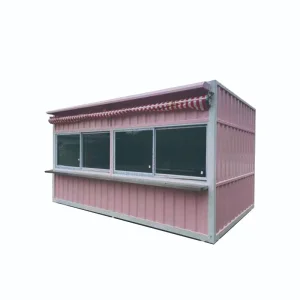
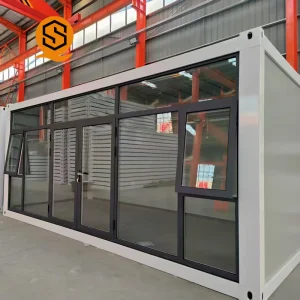
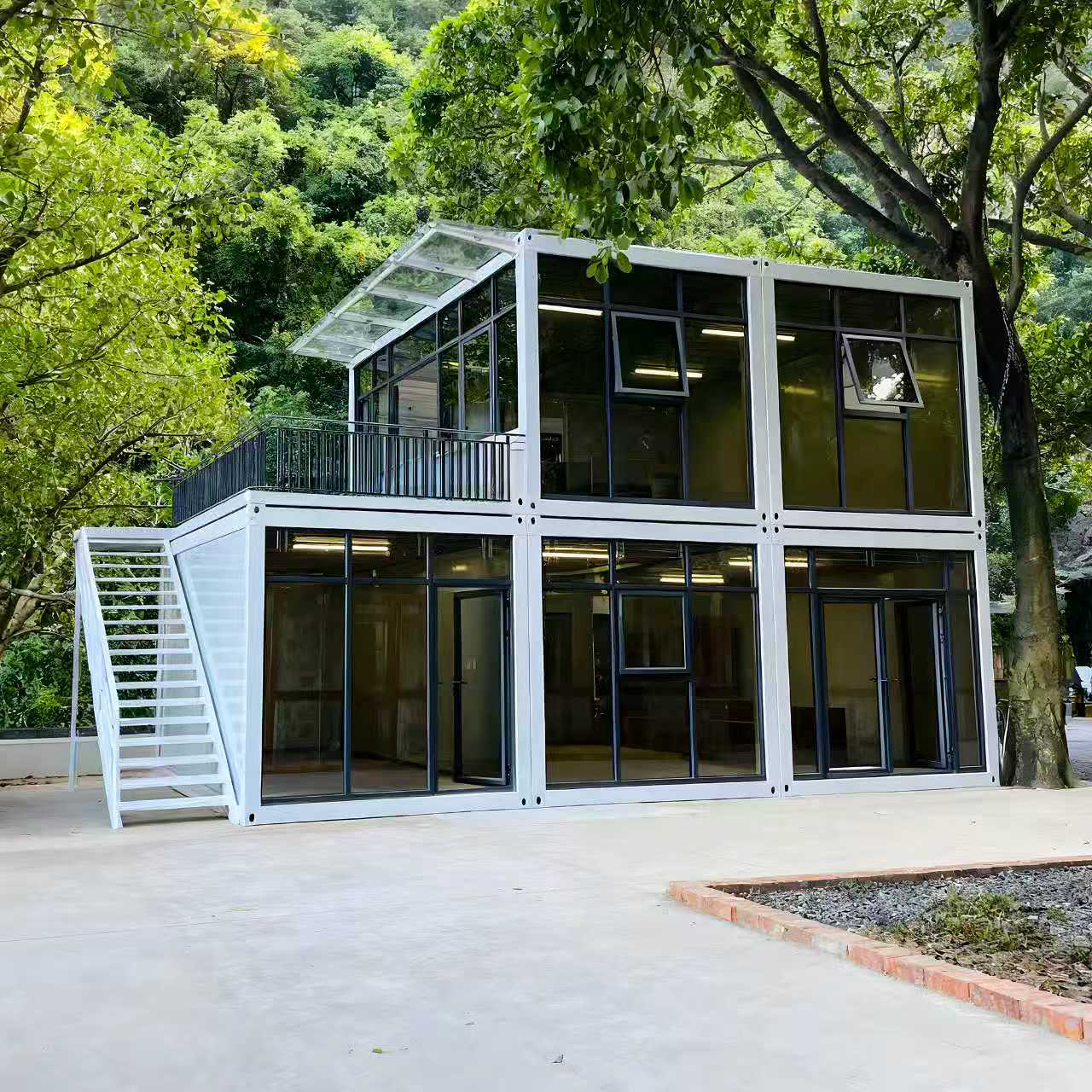
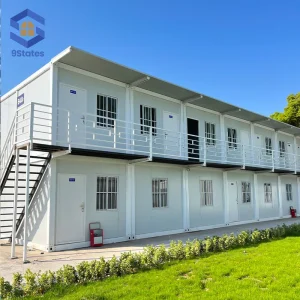
Multi-Storey Portable Prefabricated Container Building

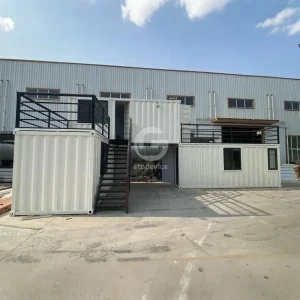
Multi-Storey Portable Prefabricated Container Building

View Engineering Specs
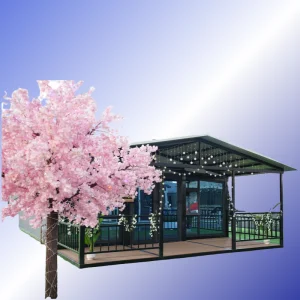
Modern Portable Prefab Coffee Shop

Modern Portable Prefab Coffee Shop for Quick Business Setup

View Engineering Specs
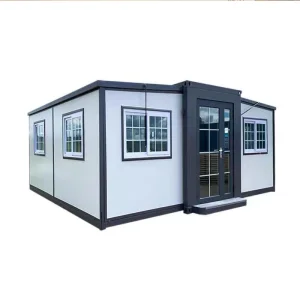
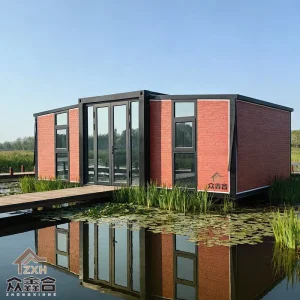
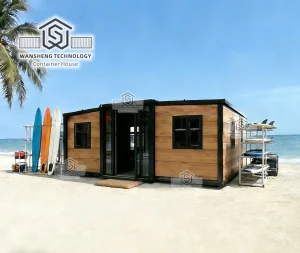
Multi-Functional Folding Container House

Multi-Functional Folding Container House for Disaster Relief

View Engineering Specs
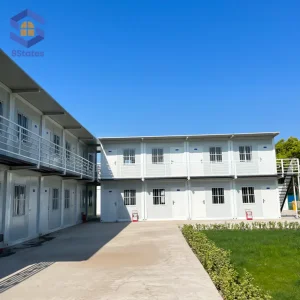
Customizable Multi-Story Container Office Building

Customizable Multi-Story Container Office Building with Balcony

View Engineering Specs
Prefab Steel Building Modular Living

Prefab Steel Building Solution for Comfortable Modular Living

View Engineering Specs
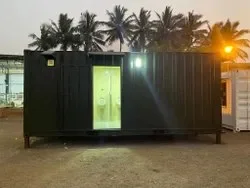
Versatile Standalone Toilet Units

Versatile Standalone Toilet Bathroom Units for Construction Sites

View Engineering Specs
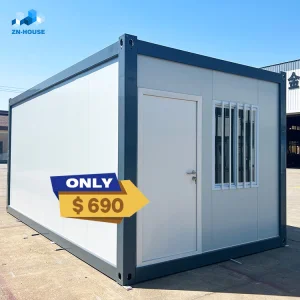
Prefab Modular Accommodation Container House

Flat Pack Prefab Modular Living House Office Tiny Cabin

View Engineering Specs
Foldable Portable Office Units with Bathrooms

Available Are Foldable Portable Office Units with Bathrooms

View Engineering Specs

1. Executive Summary & The Paradigm Shift in Container Architecture

The construction industry is experiencing a profound paradigm shift. Traditional masonry and steel-frame methodologies are increasingly being complemented, and in some sectors fully replaced, by Off-Site Manufacturing (OSM) technologies. As a key vanguard of this transition, Foshan JNM HomeTech Co., Ltd. stands as a premier manufacturer specializing in customizable modular container configurations, folding systems, and high-durability flat-pack architectures.

Sustainable urban development requires structural options that minimize spatial footprints, reduce on-site build periods, and incorporate eco-friendly materials. Our comprehensive design methodology addresses these requirements through custom OEM strategies, integrating structural engineering, advanced thermodynamic performance, and regional compliance standards. By utilizing high-yield structural steel and advanced circular insulation fabrics, JNM HomeTech delivers prefabricated structures that minimize global environmental impacts while achieving significant cost and temporal efficiencies.

"The utilization of prefabricated steel modular housing structures can reduce structural assembly timelines by up to 60%, while cutting construction waste by more than 85% compared to conventional brick-and-mortar builds."
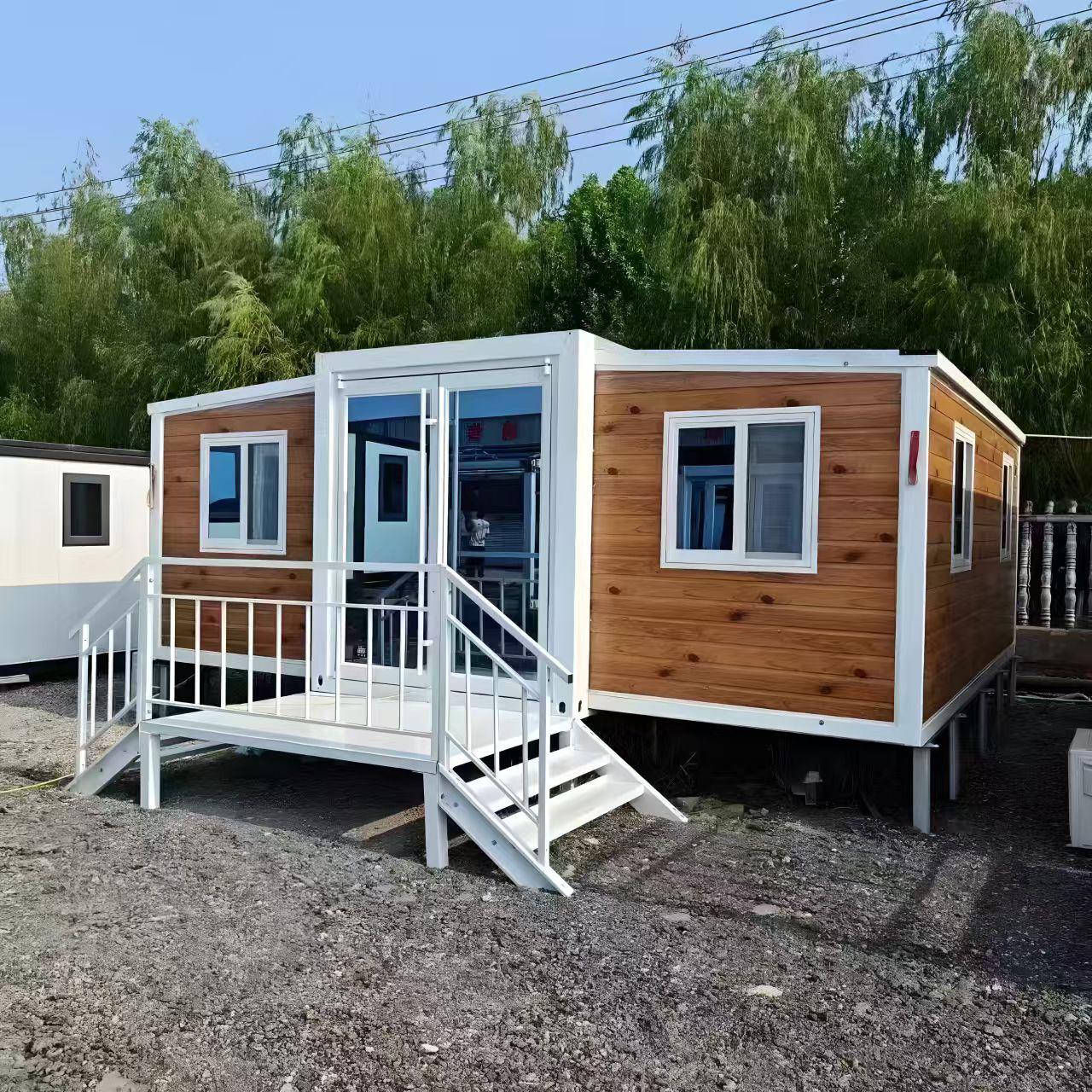
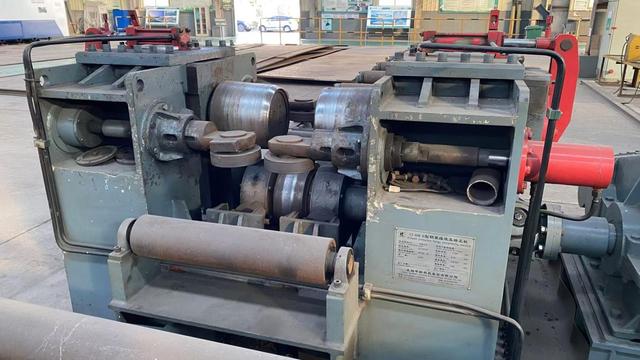
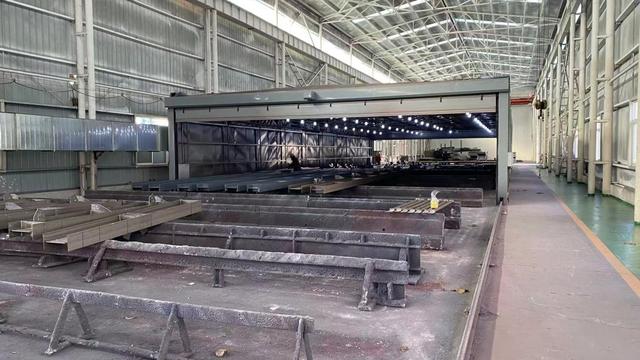
Advanced Modular Container Steel Framework Manufacturing

2. Technical Core: OEM Structural Engineering & Specifications

Every structure deployed by JNM HomeTech begins with a rigorous computer-aided engineering assessment (FEA - Finite Element Analysis) to ensure structural behavior aligns with global safety directives. Our frames are fabricated from Q355B structural steel, characterized by high yield strength (minimum yield strength of 355 MPa) and enhanced ductility, providing excellent performance under dynamic and seismic loads.

Anti-Corrosive Architecture & Coating Systems

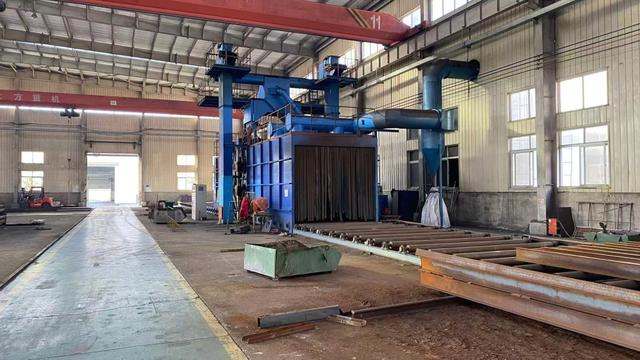
To achieve the targeted 20-year to 30-year operational life cycle, steel frames undergo a multi-stage corrosion protection protocol:

  • Hot-Dip Galvanization: A protective zinc coating (averaging 275 g/m²) is applied inside and outside all structural members, preventing oxidation in high-humidity or coastal locations.
  • Epoxy Priming & Polyurethane Coating: A marine-grade structural paint system is applied, including a zinc-rich epoxy primer followed by a polyurethane topcoat, yielding a dry film thickness (DFT) exceeding 120 microns. This ensures resistances equivalent to ISO 12944 C4 or C5-M environment certifications.

Thermodynamic & Acoustic Barrier Properties

The envelope design determines the long-term energy consumption of modular buildings. We offer highly customized insulation options to meet various energy codes:

Insulation Core Type Standard Thickness (mm) Thermal Conductivity (λ Value) U-Value Performance Fire Classification
High-Density Rockwool (120 kg/m³) 75 mm / 100 mm 0.038 W/m·K 0.45 - 0.34 W/m²·K Class A1 (Non-Combustible)
Polyurethane (PU) Sandwich Panel 50 mm / 75 mm 0.022 W/m·K 0.38 - 0.26 W/m²·K Class B1 (Flame Retardant)
Glass Wool with Aluminum Vapor Foil 100 mm 0.040 W/m·K 0.36 W/m²·K Class A2
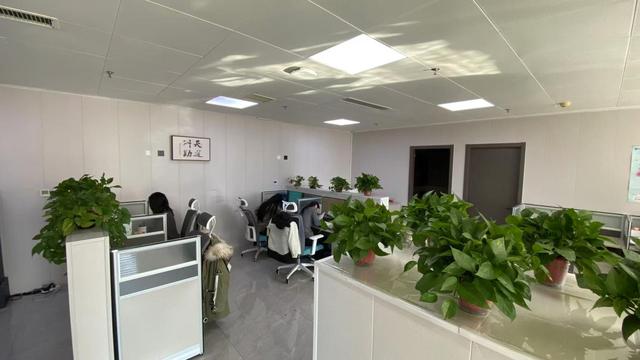
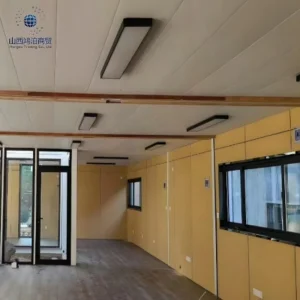
Modern Interior Finishing of Container Office Units

3. Localized Applications & Environmental Adaptation

Sustainable buildings must adapt to their local microclimates. Rather than utilizing a single generic design, JNM HomeTech designs modular components tailored to regional conditions:

Arid & High-Solar Irradiance Climates (e.g., Middle East & Africa)

We deploy high Solar Reflectance Index (SRI) external membrane coatings that reflect up to 85% of infrared radiation. Wall and ceiling systems are optimized with integrated active solar cooling ventilation (PV-powered) and dual thermal breaks to limit thermal conductivity, preventing heat penetration into the living zone.

Sub-Zero & Alpine Conditions (e.g., Northern Europe & Canada)

Designed for severe winter conditions, our structural systems utilize multi-layer continuous PU insulated sandwich profiles. To mitigate cold-bridge effects, frame connections are separated by heavy elastomer isolation layers. We reinforce roof joists to withstand snow loads of up to 2.5 kN/m² and integrate triple-glazed, argon-gas insulated low-emissivity glass assemblies.

High-Humidity Coastal Zones (e.g., Caribbean & Australia)

Engineered to resist saline corrosion and high wind loads, structural members are protected with zinc-rich epoxy coatings and C5-M certified structural paint. Fasteners and connections are made of grade 316 stainless steel. Wind-frame configurations are designed to withstand structural loads from category-4 cyclones (up to 250 km/h) in accordance with local regulations.

Q355B
Structural Carbon Steel
<0.24
U-Value Thermal Target
20+ Yrs
Operational Lifespan
100%
Recyclable Structural Frame

4. China Supply Chain Resilience: The Foshan Industrial Synergy

Foshan is recognized globally as a center for prefabricated architecture, steel-structure processing, and interior materials. Operating in this industrial zone allows JNM HomeTech to integrate all stages of production, from raw steel rolling to mechanical finishing, within a tight geographical radius.

This concentration of related industries offers key advantages:
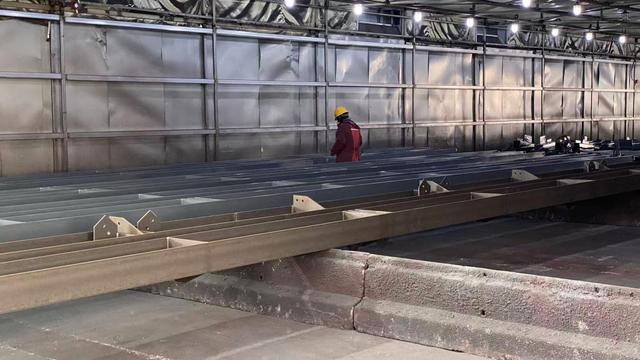
  • Direct Component Sourcing: Direct access to premium insulation manufacturers, commercial glazing suppliers, and mechanical, electrical, and plumbing (MEP) component factories minimizes lead times and procurement costs.
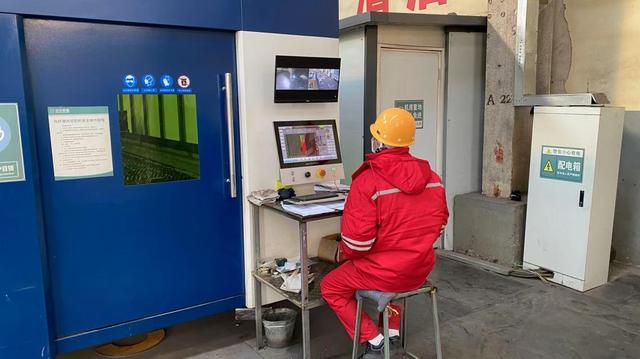
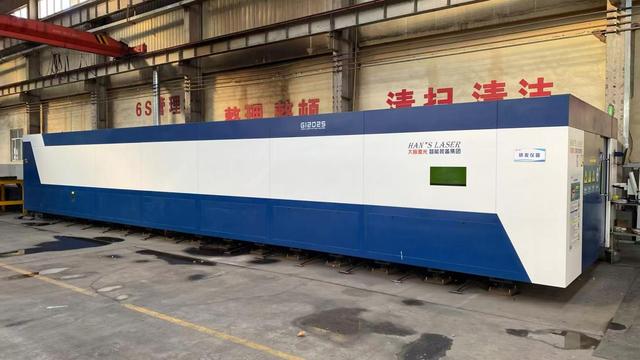
  • Scalable Production Capacities: Automated processes, including robotic structural welding, CNC profiling, and automated polyurethane continuous sandwich panels production lines, ensure high dimensional accuracy (tolerances within ±1.5 mm).
  • Efficient Global Logistics: Proximity to major ports in Shenzhen, Nansha, and Guangzhou enables streamlined transport. Our modular configurations are optimized to ship in standard 40ft High Cube containers or flat-pack arrangements, significantly reducing ocean freight costs.

5. Global Regulatory Compliance & Structural Standards

A key challenge in B2B modular construction procurement is meeting diverse regional building regulations. JNM HomeTech addresses this by aligning our custom designs with major international structural codes:

1. European Codes (Eurocodes EN 1990 - EN 1999)

Structural components are designed to meet EN 1993 for steel design, and sandwich wall units comply with EN 14509 standards. Materials carry the CE mark, verifying compliance with the Construction Products Regulation (CPR).

2. North American International Building Code (IBC) & IRC

Our units are engineered for local compliance, integrating UL-classified fire-resistant walls and structural framing details that satisfy regional design wind speeds and seismic design criteria. Mechanical systems are designed to accommodate UL/CSA/ETL components.

3. Australian Standards (AS/NZS 1170 & AS 3600)

We provide structural calculations and material reports for developments in Australia. Designs account for high-wind environments (Category C and D regions) and use hot-dip galvanized components that meet local anti-corrosion requirements.
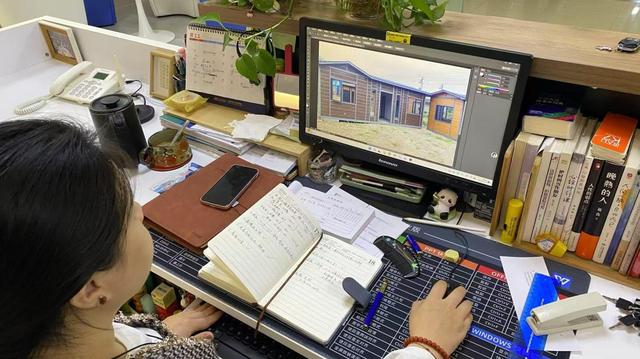
Interior view showing multi-functional modular layout with sanitary connections

6. Future Technological Roadmap & Material Innovation

As building efficiency requirements evolve, JNM HomeTech continues to research and integrate advanced materials and smart systems into our design offerings:
  • Bio-Based Composite Insulation: We are testing carbon-negative insulations derived from industrial agricultural fibers, aiming to lower the embodied carbon of each unit while maintaining necessary thermal properties.
  • Integrated Micro-Generation & Storage: Partnering with solar companies, we are developing roof-integrated photovoltaic systems paired with localized battery storage, enabling units to operate off the grid in remote locations.
  • IoT-Enabled Structural Monitoring: Future premium designs will offer optional embedded micro-sensors to monitor moisture levels, temperature differentials, and structural movements in real time, supporting proactive maintenance.

7. Frequently Asked Questions (FAQ)

What is the structural life cycle of JNM HomeTech modular containers?
Our structures are engineered for an operational lifespan of 20 to 30 years. This longevity is supported by using Q355B structural steel frames, hot-dip galvanization, and multi-layer protective coatings that resist environmental degradation.
How do the folding and expandable container units ship?
To optimize shipping costs, folding and expandable units fold down to a compact profile during transport. Up to 4 modular units can be flat-packed and linked to fit into a single standard 40ft High Cube container, reducing ocean freight costs.
Can the interior layouts and insulation materials be customized for OEM projects?
Yes. We support custom OEM requests, including custom floor layouts, electrical configurations (conforming to CE, UL, or SAA standards), window placement, and specialized insulation layers (Rockwool, Polyurethane, or Glass Wool) based on local climate needs.
Are these prefabricated buildings compliant with national fire safety codes?
Yes, our panels are tested to meet international fire performance classifications. When requested, we use high-density, non-combustible Rockwool panels rated Class A1, which prevent flame spread and provide structural stability under high-heat conditions.

Innovative Industrial Solutions Portfolio

Explore our specialized modular buildings designed for commercial, remote camp, and residential application requirements.
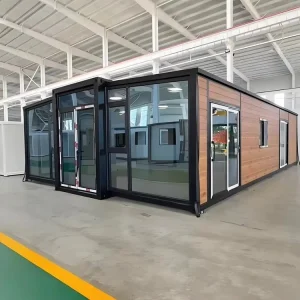
Quick-Assembly Steel Frame Modular Container Housing

Quick-Assembly Steel Frame Modular Container Housing Solution

View Engineering Specs
20FT 40FT Expandable Prefab Villa Tiny House

20FT 40FT Expandable Prefab Villa Tiny House

View Engineering Specs
Modular Mobile Labor Camp Office Container

20-Year Lifespan Modular Mobile Labor Camp Office Container

View Engineering Specs
Customizable Mini Prefabricated Container Tiny House

Customizable Mini Prefabricated Container Tiny House

View Engineering Specs
Luxury Modular Portable Tiny House

Luxury Modular Portable Tiny House Expandable Container House

View Engineering Specs
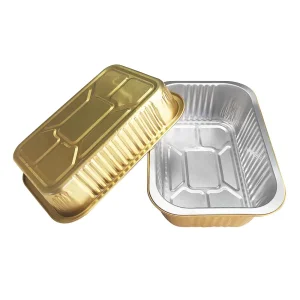
1000ml Aluminum Foil Loaf Cake Baking Container

1000ml Smooth Wall Loaf Cake Baking Container with Lid

View Engineering Specs
Sustainable Coffee-Themed Container Home

Sustainable Living with a Coffee-Themed Container Home

View Engineering Specs
Prefab Container House 20FT/40FT

Prefab Container House 20FT/40FT Insulation Waterproof

View Engineering Specs