A container home may look rugged, but its steel shell faces rain, humidity, salt, and daily temperature swings. Small paint failures can expose bare metal. Water can also collect around roof seams, window cutouts, and poorly drained corners. Left unnoticed, these details may lead to corrosion, leaks, or indoor condensation.
The scale of corrosion is worth noting. NACE International’s IMPACT study estimated its global cost at $2.5 trillion annually, or 3.4% of global GDP. That figure covers many industries, not container homes specifically, but it shows why protecting steel matters. Building-science expert Dr. Joseph Lstiburek describes the enclosure as “the interface between the interior and exterior environments.” For a container home, that interface includes coatings, insulation, vapor control, seals, and drainage. No coating lasts forever.
Knowing how to maintain a container home long term means checking those systems before damage becomes obvious. Inspect welds and cut edges for bubbling paint or rust. Clear roof drains and look for damp insulation after heavy rain. Check door and window seals, especially where metal meets another material. Keep a simple record of inspection dates, repairs, and coating products. It helps reveal changes over time.
A checklist is useful, but it cannot see behind every wall. That is the uncomfortable part. If persistent moisture, spreading rust, or unusual movement appears, ask a qualified building professional to assess it. Regular care will not prevent every problem. It can make many problems easier to spot, repair, and budget for.
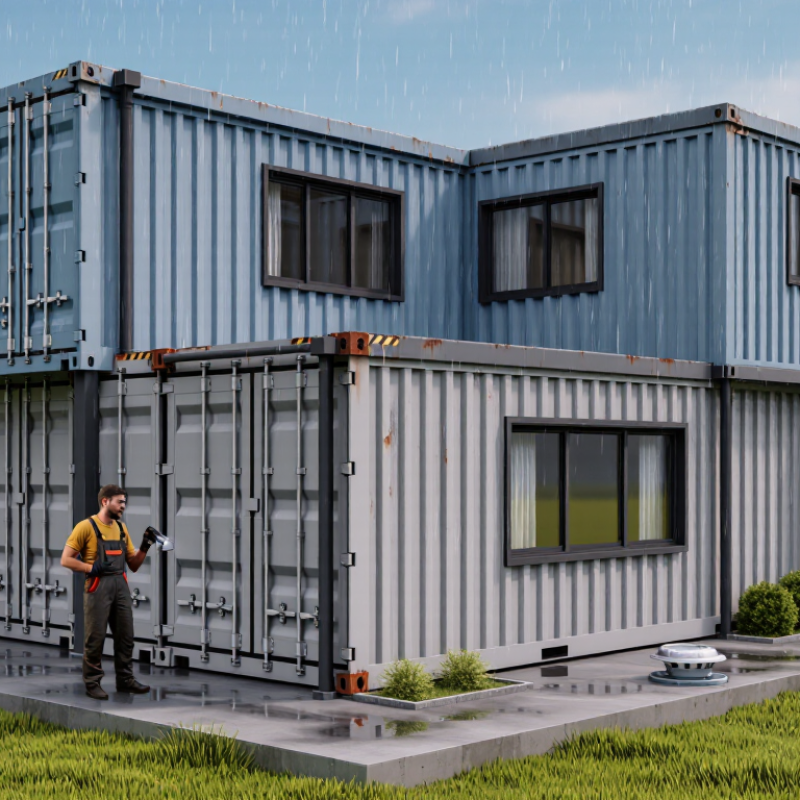
Long-term container home maintenance means checking the shell, joints, roof, and interior systems before small defects spread. Inspect exterior steel for blistering paint, rust, and scratches, especially around cut edges, welds, and door frames. NACE International’s 2016 IMPACT study estimated corrosion costs the global economy US$2.5 trillion annually, while established corrosion-control practices could reduce costs by 15–35%. Those figures cover many industries, not container homes specifically, but they show why coating damage deserves prompt attention. Small marks matter.
Check roof seams and drainage after heavy rain. Clear leaves from gutters, then look for standing water, loose flashing, or damp patches inside. Re-seal openings when sealant cracks, but investigate the cause of recurring moisture rather than covering the stain. Condensation also needs attention: inspect insulation, ventilation, and cold corners where water droplets or musty odors appear. The U.S. Environmental Protection Agency reports that indoor pollutant levels can be two to five times outdoor levels, sometimes higher. Its indoor-air guidance supports regular ventilation and moisture control, though it is not specific to container buildings. Keep a dated log of inspections and repairs. It may feel fussy, and a log will not catch everything, but it can reveal patterns before leaks or corrosion become expensive.
| Maintenance area | Typical frequency | What to inspect | Common maintenance action | Why it matters |
|---|---|---|---|---|
| Roof, seams, and exterior coating | Twice a year and after severe storms | Standing water, damaged sealant, coating wear, rust, and loose roof fixtures | Clear debris; repair failed sealant; remove surface rust and renew protective coating where needed | Helps prevent water intrusion and slows corrosion of exposed steel |
| Exterior walls and cut edges | At least annually | Scratches, rust spots, cracks around openings, and deterioration around doors or windows | Clean affected areas, treat corrosion, and restore compatible primer and paint or coating | Protects the steel shell and helps limit corrosion from moisture and weather exposure |
| Windows, doors, and seals | Every 6–12 months | Cracked or shrunken sealant, water stains, drafts, sticking hardware, and blocked drainage paths | Clean tracks and drainage openings; adjust hardware; renew failed seals using suitable materials | Reduces leaks, drafts, and moisture damage around openings |
| Foundation, supports, and anchoring | Annually and after unusual ground movement | Uneven settlement, standing water, shifting supports, and visible damage to connections | Keep drainage clear and have significant movement or damaged structural connections assessed by a qualified professional | Supports stable load transfer and helps prevent distortion that can affect doors, windows, and utilities |
| Gutters and site drainage | At least twice a year; more often near trees | Leaves, blockages, leaks, overflowing gutters, and water collecting near supports | Clear gutters and downspouts; direct discharge away from the home; correct drainage problems | Limits repeated wetting of the shell and reduces the risk of water-related foundation problems |
| Interior moisture and ventilation | Seasonally and whenever condensation appears | Persistent condensation, musty odors, damp finishes, and moisture-prone corners or closets | Find and fix moisture sources; use appropriate ventilation; keep air pathways clear | Helps prevent mold growth, material deterioration, and hidden moisture damage |
| Plumbing and water-heating equipment | Visual checks every few months; service as specified by equipment manufacturers | Leaks, corrosion, unusual noises, loose connections, and changes in water pressure | Repair leaks promptly and arrange qualified servicing for equipment that needs inspection or adjustment | Early detection can reduce water damage and help equipment operate safely and reliably |
| Electrical system | Periodic visual checks; professional inspection when issues arise or as locally required | Tripped breakers, warm or damaged outlets, flickering lights, and water near electrical components | Stop using damaged components and have electrical faults assessed by a licensed electrician | Supports electrical safety and helps identify faults before they cause further damage |
| Insulation and condensation control | Annually, and after leaks or interior renovations | Damp or displaced insulation, cold surfaces, and signs of condensation behind accessible finishes | Address leaks and ventilation issues before replacing damaged insulation or closing wall cavities | Maintains indoor comfort and helps reduce moisture buildup within the building envelope |
| Maintenance records | Update after each inspection or repair | Dates, locations of defects, photographs, repair materials, and completed work | Keep a simple log and schedule follow-up checks for unresolved or recurring issues | Makes recurring problems easier to spot and helps plan timely repairs |
Maintenance intervals are general guidance. Climate, site conditions, materials, local requirements, and the home’s design may call for more frequent checks; follow applicable codes and equipment instructions.
Check exterior steel, roof seams, welds, door frames, and window edges for rust, scratches, or gaps. Small marks matter.
Look after heavy rain and seasonal temperature changes. Clear leaves from gutters, then check for standing water, loose flashing, and damp indoor patches.
Replace failed sealant, but investigate recurring moisture instead of covering the stain. Water may be entering behind insulation or wall finishes.
Look for droplets on cold corners, damp surfaces, or musty odors. Review insulation and ventilation if these signs keep appearing.
Dry wet areas promptly. Mold can begin growing on wet materials within 24 to 48 hours, so delays can make repairs harder.
If corrosion has penetrated the steel, request a qualified assessment. Painting over deep damage may hide a problem rather than fix it.
Look for loose outlets, heat, or water exposure around wiring and exterior connections. Ask a qualified professional to assess anything concerning.
Keep dated notes and photos of repairs, damp spots, and coating damage. A log will not catch everything, but patterns can be useful. It can feel fussy.
Long-term container home maintenance involves more than occasional repairs. Weather, moisture, temperature changes, and everyday use can gradually affect the structure, finishes, and building systems. Regularly checking the exterior for rust, damaged coatings, leaks, and signs of water intrusion helps catch small issues before they spread. Inside, attention to doors, windows, ventilation, plumbing, electrical components, and heating or cooling systems can keep the home comfortable and dependable.
Knowing how to maintain a container home long term means creating a practical routine: inspect key areas, clean and protect exposed surfaces, and address wear promptly. Preventive care can reduce safety risks, avoid more costly repairs, and preserve the home’s condition over time. With consistent attention to both structural elements and essential systems, a container home can remain useful, efficient, and comfortable for many years.

 JNM HomeTech